
Utilizza questo identificativo per citare o creare un link a questo documento:
http://elartu.tntu.edu.ua/handle/lib/51922
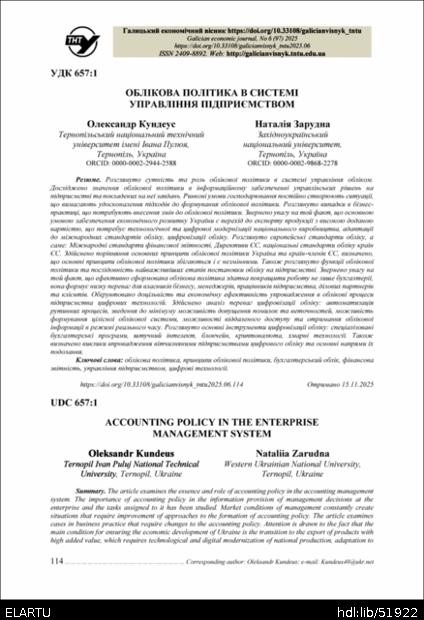
| Titolo: | Облікова політика в системі управління підприємством |
| Titoli alternativi: | Accounting policy in the enterprise management system |
| Autori: | Кундеус, Олександр Михайлович Наталія, Зарудна Kundeus, Oleksandr Zarudna, Nataliia |
| Affiliation: | Тернопільський національний технічний університет імені Івана Пулюя, Тернопіль, Україна Західноукраїнський національний університет, Тернопіль, Україна Ternopil Ivan Puluj National Technical University, Ternopil, Ukraine Western Ukrainian National University, Ternopil, Ukraine |
| Bibliographic description (Ukraine): | Кундеус О. М. Облікова політика в системі управління підприємством / Кундеус Олександр Михайлович, Наталія Зарудна // ГЕВ. — Т. : ТНТУ, 2025. — Том 97. — № 6. — С. 114–123. — (Облік і оподаткування). |
| Bibliographic reference (2015): | Кундеус О. М., Наталія З. Облікова політика в системі управління підприємством // ГЕВ, Тернопіль. 2025. Том 97. № 6. С. 114–123. |
| Bibliographic citation (APA): | Kundeus, O., & Zarudna, N. (2025). Oblikova polityka v systemi upravlinnia pidpryiemstvom [Accounting policy in the enterprise management system]. Galician economic journal, 97(6), 114-123. TNTU. [in Ukrainian]. |
| Bibliographic citation (CHICAGO): | Kundeus O., Zarudna N. (2025) Oblikova polityka v systemi upravlinnia pidpryiemstvom [Accounting policy in the enterprise management system]. Galician economic journal (Tern.), vol. 97, no 6, pp. 114-123 [in Ukrainian]. |
| Is part of: | Галицький економічний вісник, 6 (97), 2025 Galician economic journal, 6 (97), 2025 |
| Journal/Collection: | Галицький економічний вісник |
| Issue: | 6 |
| Volume: | 97 |
| Data: | 18-nov-2025 |
| Submitted date: | 15-nov-2025 |
| Date of entry: | 9-mar-2026 |
| Editore: | ТНТУ TNTU |
| Place of the edition/event: | Тернопіль Ternopil |
| DOI: | https://doi.org/10.33108/galicianvisnyk_tntu2025.06.114 |
| UDC: | 657 1 |
| Parole chiave: | облікова політика принципи облікової політики бухгалтерський облік фінансова звітність управління підприємством цифрові технології accounting policy accounting policy principles accounting financial reporting enterprise management digital technologies |
| Number of pages: | 10 |
| Page range: | 114-123 |
| Start page: | 114 |
| End page: | 123 |
| Abstract: | Розглянуто сутність та роль облікової політики в системі управління обліком.
Досліджено значення облікової політики в інформаційному забезпеченні управлінських рішень на
підприємстві та покладених на неї завдань. Ринкові умови господарювання постійно створюють ситуації,
що вимагають удосконалення підходів до формування облікової політики. Розглянуто випадки в бізнес-
практиці, що потребують внесення змін до облікової політики. Звернено увагу на той факт, що основною
умовою забезпечення економічного розвитку України є перехід до експорту продукції з високою доданою
вартістю, що потребує технологічної та цифрової модернізації національного виробництва, адаптації
до міжнародних стандартів обліку, цифровізації обліку. Розглянуто європейські стандарти обліку, а
саме: Міжнародні стандарти фінансової звітності, Директиви ЄС, національні стандарти обліку країн
ЄС. Здійснено порівняння основних принципи облікової політики Україна та країн-членів ЄС, визначено,
що основні принципи облікової політики збігаються і є незмінними. Також розглянуто функції облікової
політики та послідовність найважливіших етапів постановки обліку на підприємстві. Звернено увагу на
той факт, що ефективно сформована облікова політика здатна покращити роботу не лише бухгалтерії,
вона формує низку переваг для власників бізнесу, менеджерів, працівників підприємства, ділових партнерів
та клієнтів. Обґрунтовано доцільність та економічну ефективність упровадження в облікові процеси
підприємства цифрових технологій. Здійснено аналіз переваг цифровізації обліку: автоматизація
рутинних процесів, зведення до мінімуму можливість допущення помилок та неточностей, можливість
формування цілісної облікової системи, можливості віддаленого доступу та отримання облікової
інформації в режимі реального часу. Розглянуто основні інструменти цифровізації обліку: спеціалізовані
бухгалтерські програми, штучний інтелект, блокчейн, криптовалюта, хмарні технології. Також
визначено виклики впровадження вітчизняними підприємствами цифрового обліку та основні напрями їх подолання. The article examines the essence and role of accounting policy in the accounting management system. The importance of accounting policy in the information provision of management decisions at the enterprise and the tasks assigned to it has been studied. Market conditions of management constantly create situations that require improvement of approaches to the formation of accounting policy. The article examines cases in business practice that require changes to the accounting policy. Attention is drawn to the fact that the main condition for ensuring the economic development of Ukraine is the transition to the export of products with high added value, which requires technological and digital modernization of national production, adaptation to international accounting standards, digitalization of accounting. European accounting standards are considered, namely: International financial reporting standards, EU Directives, national accounting standards of EU countries. A comparison of the main principles of the accounting policy of Ukraine and EU member states was made, it was determined that the main principles of the accounting policy coincide and are unchanged. The article also examines the functions of the accounting policy and the sequence of the most important stages of accounting at the enterprise. Attention is drawn to the fact that an effectively formed accounting policy is able to improve the work of not only accounting, it forms a number of advantages for business owners, managers, company employees, business partners and clients. The expediency and economic efficiency of introducing digital technologies into the accounting processes of the enterprise are substantiated. An analysis of the advantages of digitalization of accounting was carried out: automation of routine processes, minimization of the possibility of making errors and inaccuracies, the possibility of forming a complete accounting system, the possibility of remote access and obtaining accounting information in real time. The main tools of digitalization of accounting are considered: specialized accounting programs, artificial intelligence, blockchain, cryptocurrency, cloud technologies. The challenges of implementing digital accounting by domestic enterprises and the main directions of overcoming them are also identified. |
| URI: | http://elartu.tntu.edu.ua/handle/lib/51922 |
| ISSN: | 2409-8892 |
| Copyright owner: | © Тернопільський національний технічний університет імені Івана Пулюя, 2025 |
| URL for reference material: | https://doi.org/10.30838/EP.205.103-110 https://elartu.tntu.edu.ua/handle/lib/46506 https://uk.wikipedia.org/wiki/Міжнародні_стандарти_фінансової_звітності https://www.uhy-prostir.com/blog/shho-oznachaye-postanovka-obliku-na-pidpriyemstvi/ https://ecj.oa.edu.ua/articles/2013/n23/34.pdf https://doi.org/10.32782/2524-0072/2024-61-68 http://sepd.tntu.edu.ua/images/stories/pdf/2023/23snmute.pdf https://doi.org/10.33108/sepd2023.01.086 https://uk.wikipedia.org/wiki/Mizhnarodni_standarty_finansovoji_zvitnosti |
| References (Ukraine): | 1. Божок С., Артюх О. Методичні аспекти формування облікової політики України та Європи: порівняльний аспект. International Science Journal of Management, Economics & Finance. 2023. Vol. 2. No. 4. P. 27–37. DOI: 10.46299/j.isjmef.20230204.04 2. Кім О. О. Підвищення інвестиційної привабливості економіки України для ТНК як чинник розвитку її експортного потенціалу в процесі євроінтеграції. Економічний простір. 2025. № 205. С. 103–110. DOI: https://doi.org/10.30838/EP.205.103-110 3. Коваль Л. В. Облікова політика в управлінні підприємством. Ефективна економіка. 2019. № 5. Doi: 10.32702/2307-2105-2019.5.42. 4. Королюк Т., Краузе О. Первинні документи в бухгалтерському обліку підприємства в умовах цифрової економіки. Трансформація бізнесу для сталого майбутнього: дослідження, цифровізація та інновації : монографія /за ред. д.е.н., проф. О. А. Сороківської. Тернопіль : ФОП Паляниця В. А., 2024. С. 26–25. URL: https://elartu.tntu.edu.ua/handle/lib/46506 (дата звернення: 13.11. 2025). 5. Краузе О., Бойко О. Роль хмарних технологій в удосконаленні обліково-аналітичних процесів. Трансформація бізнесу для сталого майбутнього: дослідження, цифровізація та інновації : монографія /за ред. д.е.н., проф. О. А. Сороківської. Тернопіль: ФОП Паляниця В. А., 2024. С. 36–45. URL: https://elartu.tntu.edu.ua/handle/lib/46506 (дата звернення: 13.11. 2025). 6. Міжнародні стандарти фінансової звітності. ВікіпедіЯ. URL: https://uk.wikipedia.org/wiki/Міжнародні_стандарти_фінансової_звітності (дата звернення: 19.11. 2025). 7. Новодворська В. Що означає постановка обліку на підприємстві. URL: https://www.uhy-prostir.com/blog/shho-oznachaye-postanovka-obliku-na-pidpriyemstvi/ (дата звернення: 14.11. 2025). 8. Облік і правове забезпечення господарських процесів підприємства : навчальний посібник /Г.І. Ляхович, Н.Я. Зарудна, О.М. Кундеус, Т.А. Яковець. Тернопіль : КРОК, 2017. 344 с. 9. Піскунова Н. В. Принципи формування облікової політики та чинники впливу на її вибір. Наукові записки. Серія «Економіка». 2013. Вип. 23. С. 174–177. URL: https://ecj.oa.edu.ua/articles/2013/n23/34.pdf (дата звернення: 15.11. 2025). 10. Плекан М. В., Курей О. А., Возняк Р-Я. А. Переваги діджиталізації в обліку для підприємств. Економіка та суспільство. 2024. Вип. 61. DOI: https://doi.org/10.32782/2524-0072/2024-61-68 11. Царук В. Ю. Прозорість у системі корпоративного управління: облікова інтерпретація розвитку. БізнесІнформ. 2020. № 2. URL: (дата звернення: 15.11. 2025). 12. Шведа Н., Краузе О. Трансформація бізнес-моделей в умовах цифрової економіки. Соціально- економічні проблеми і держава (електронний журнал). 2023. Вип. 1 (28). С. 86–94. URL: http://sepd.tntu.edu.ua/images/stories/pdf/2023/23snmute.pdf (дата звернення: 15.11. 2025). DOI: https://doi.org/10.33108/sepd2023.01.086 |
| References (International): | 1. Bozhok S., Artjukh O. (2023) Metodychni aspekty formuvannja oblikovoji polityky Ukrajiny ta Jevropy: porivnjaljnyj aspekt [Methodical aspects of accounting policy formation of Ukraine and Europe: comparative aspect]. International Science Journal of Management, Economics & Finance, vol. 2, no. 4, pp. 27–37. DOI: 10.46299/j.isjmef.20230204.04 2. Kim O. O. (2025) Pidvyshhennja investycijnoji pryvablyvosti ekonomiky Ukrajiny dlja TNK jak chynnyk rozvytku jiji eksportnogho potencialu v procesi jevrointeghraciji [Increasing the investment attractiveness of Ukraineʼs economy for TNCs as a factor in the development of its export potential in the process of European integration]. Ekonomichnyj prostir [Economic space], no. 205, pp. 103–110. DOI: https://doi.org/10.30838/EP.205.103-110 3. Kovalj L. V. (2019) Oblikova polityka v upravlinni pidpryjemstvom [Accounting policy in enterprise management]. Efektyvna ekonomika [Efficient economy], no. 5. Doi: 10.32702/2307-2105-2019.5.42. 4. Koroljuk T., Krauze O. (2024). Pervynni dokumenty v bukhghaltersjkomu obliku pidpryjemstva v umovakh cyfrovoji ekonomiky [Primary documents in the accounting of the enterprise in the conditions of the digital economy]. Transformacija biznesu dlja stalogho majbutnjogho: doslidzhennja, cyfrovizacija ta innovaciji: monoghrafija [Business transformation for a sustainable future: research, digitalisation and innovation: a monograph], za red. d.e.n., prof. O. A. Sorokivsjkoji. Ternopilj: FOP Paljanycja V.A., pp. 25–26. Available at: https://elartu.tntu.edu.ua/handle/lib/46506 (accessed: 13 November 2025). 5. Krauze O., Bojko O. (2024) Rolj khmarnykh tekhnologhij v udoskonalenni oblikovo-analitychnykh procesiv [The role of cloud technologies in improving accounting and analytical processes]. Transformacija biznesu dlja stalogho majbutnjogho: doslidzhennja, cyfrovizacija ta innovaciji: monoghrafija [Business transformation for a sustainable future: research, digitalisation and innovation: a monograph], za red. d.e.n., prof. O. A. Sorokivsjkoji. Ternopilj: FOP Paljanycja V. A., pp. 36–45. Available at: https://elartu.tntu.edu.ua/handle/lib/46506 (accessed: 13 November 2025). 6. Mizhnarodni standarty finansovoji zvitnosti [International Financial Reporting Standards]. VikipediJa [Wikipedia]. Available at: https://uk.wikipedia.org/wiki/Mizhnarodni_standarty_finansovoji_zvitnosti (accessed: 14 November 2025). 7. Novodvorsjka V. Shho oznachaje postanovka obliku na pidpryjemstvi [What does accounting at the enterprise mean]. Available at: https://www.uhy-prostir.com/blog/shho-oznachaye-postanovka-obliku-na-pidpriyemstvi/ (accessed: 14 November 2025). 8. Ljakhovych Gh. I., Zarudna N. Ja., Kundeus O. M., Jakovecj T. A. (2017). Oblik i pravove zabezpechennja ghospodarsjkykh procesiv pidpryjemstva: navchaljnyj posibnyk [Accounting and legal support of economic processes of the enterprise: a study guide]. Ternopilj: KROK, 344 p. 9. Piskunova N. V. (2013) Pryncypy formuvannja oblikovoji polityky ta chynnyky vplyvu na jiji vybir [Principles of accounting policy formation and factors influencing its choice]. Naukovi zapysky. Serija “Ekonomika” [Scientific notes. Series “Economy”], vol. 23, pp. 174–177. Available at: https://ecj.oa.edu.ua/articles/2013/n23/34.pdf (accessed: 15 November 2025). 10. Plekan M. V., Kurej O. A; Voznjak R-Ja. A (2024) Perevaghy didzhytalizaciji v obliku dlja pidpryjemstv [Advantages of digitalization in accounting for enterprises]. Ekonomika ta suspiljstvo [Economy and society], vol. 61. DOI: https://doi.org/10.32782/2524-0072/2024-61-68 11. Caruk V. Ju. (2020) Prozoristj u systemi korporatyvnogho upravlinnja: oblikova interpretacija rozvytku [Transparency in the corporate governance system: accounting interpretation of development]. BiznesInform [BusinessInform], no. 2. Available at: (accessed: 15 November 2025). 12. Shveda N., Krauze O. (2023) Transformacija biznes-modelej v umovakh cyfrovoji ekonomiky [Transformation of business models in the conditions of the digital economy]. Socialjno-ekonomichni problemy i derzhava (elektronnyj zhurnal) [Socio-economic problems and the state (electronic magazine)], vol. 1 (28), pp. 86–94. Available at: http://sepd.tntu.edu.ua/images/stories/pdf/2023/23snmute.pdf (accessed: 15 November 2025). DOI: https://doi.org/10.33108/sepd2023.01.086 |
| Content type: | Article |
| È visualizzato nelle collezioni: | Галицький економічний вісник, 2025, № 6 (97) |
File in questo documento:
| File | Descrizione | Dimensioni | Formato | |
|---|---|---|---|---|
| GEJ_2025v97n6_Kundeus_O-Accounting_policy_in_the_114-123.pdf | 3,15 MB | Adobe PDF | Visualizza/apri | |
| GEJ_2025v97n6_Kundeus_O-Accounting_policy_in_the_114-123__COVER.png | 1,26 MB | image/png | Visualizza/apri |
Tutti i documenti archiviati in DSpace sono protetti da copyright. Tutti i diritti riservati.